
Architecture preserves the stories of civilizations, cultural identities, and technological achievements across generations. From ancient temples and medieval castles to historic residential buildings, every architectural structure offers valuable insights into the people who designed, constructed, and inhabited it. However, many historical buildings have deteriorated, suffered damage from natural disasters, or disappeared entirely due to war and urban development. As digital technology continues to advance, researchers are finding innovative ways to preserve these architectural legacies and make them accessible to future generations. One promising development is the integration of advanced visualization techniques into architectural research and historical documentation.
The growing application of digital technologies is transforming how historians, architects, and preservation specialists understand the built environment. Through detailed digital models, historical evidence can be reconstructed into interactive representations that communicate architectural features with remarkable clarity. The future of architectural history increasingly depends on combining traditional research methods with emerging digital tools. This approach enables professionals to examine lost structures, compare historical design principles, and communicate complex architectural information to wider audiences. By connecting historical evidence with modern computational methods, digital reconstruction offers new possibilities for preserving cultural heritage while supporting education, research, and responsible conservation.
Understanding The Role Of 3D Digital Reconstruction In Architectural History
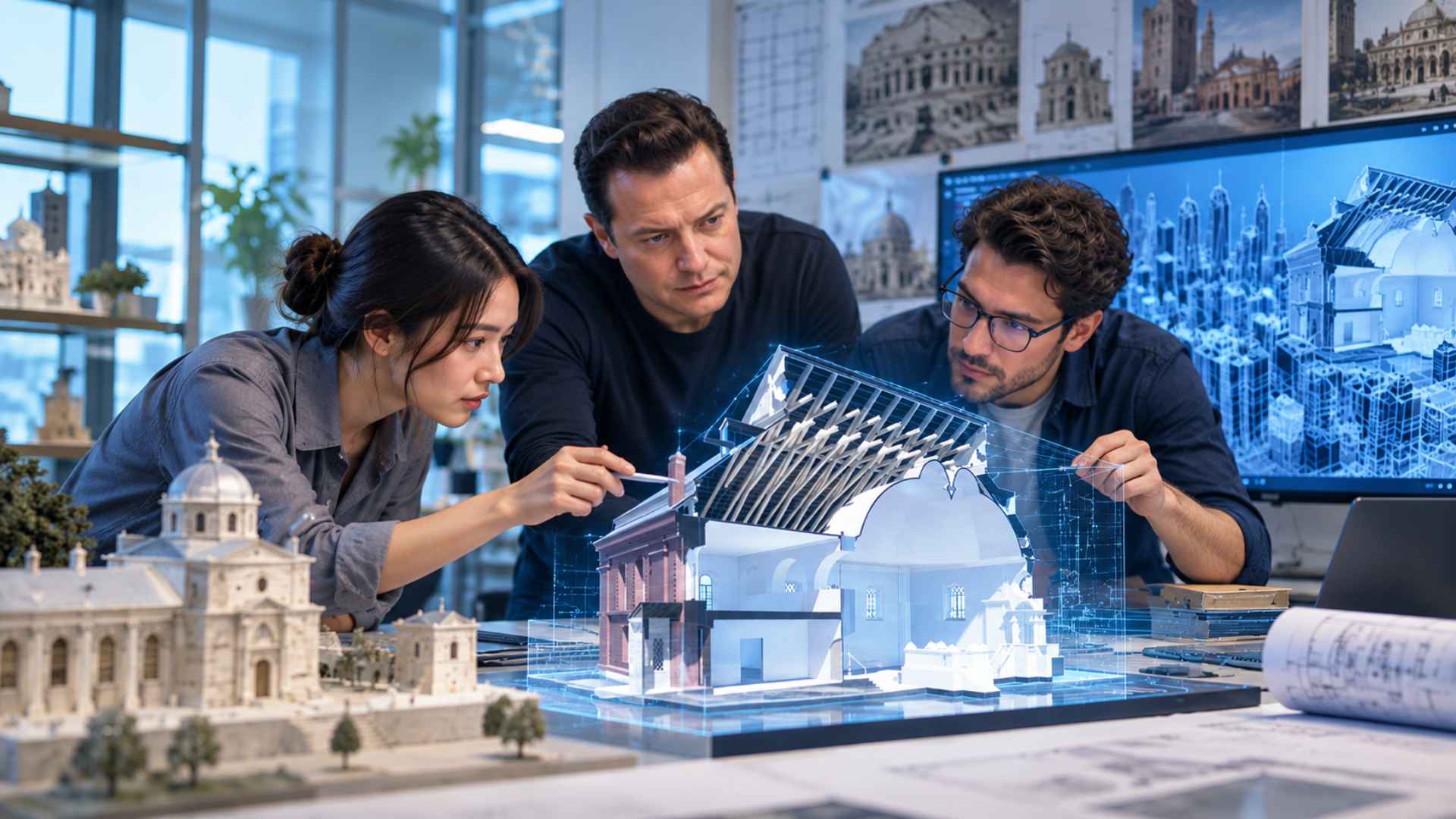
3D digital reconstruction is the process of creating three-dimensional representations of buildings, monuments, and architectural environments using historical documents, photographs, archaeological findings, measured drawings, and other reliable sources. Unlike conventional illustrations, these digital models allow viewers to examine structures from multiple angles, understand spatial relationships, and visualize architectural details that may be difficult to interpret through two-dimensional materials. Depending on the available evidence, researchers can reconstruct existing buildings, document damaged structures, or propose historically informed representations of buildings that no longer survive. This flexibility makes the technology particularly valuable for investigating architectural heritage across different periods and geographical regions.
The relationship between digital reconstruction and architectural history extends beyond visual representation. Historical architecture often requires researchers to interpret incomplete evidence, identify changes made over time, and distinguish original features from later modifications. Digital models can organize these findings within a coherent spatial framework, helping specialists evaluate competing interpretations and communicate their conclusions more effectively. When combined with archival research and archaeological documentation, 3D reconstruction can support a more transparent understanding of architectural development. It also creates opportunities for collaboration between historians, engineers, conservators, and digital specialists, encouraging interdisciplinary approaches to studying cultural heritage.
Preserving Lost Buildings And Vulnerable Cultural Heritage
One of the most significant applications of digital reconstruction is the preservation of architectural knowledge when physical structures become endangered or disappear. Historic buildings may be threatened by earthquakes, flooding, armed conflict, pollution, or insufficient maintenance. Although digital models cannot replace the original materials, craftsmanship, and historical atmosphere of a physical monument, they can preserve valuable information about its appearance, dimensions, and construction. Researchers can combine laser scanning, photogrammetry, historical photographs, and architectural drawings to document structures in considerable detail. These records provide a useful foundation for future research, conservation planning, and public interpretation.
Digital preservation also changes how cultural heritage can be shared across geographical boundaries. Museums, universities, and heritage organizations can publish interactive models that allow people to examine architectural landmarks without traveling to the original location. Such access is especially valuable when monuments are situated in remote areas or are no longer safe for public visits. By preserving architectural information in accessible digital formats, institutions can support international research and encourage greater public appreciation of historical environments. Long-term preservation still requires careful data management, reliable storage systems, and periodic updates to ensure that digital records remain usable as technology evolves.
Artificial Intelligence And Advanced Modeling Techniques
Artificial intelligence is creating new opportunities for improving the speed and accuracy of digital architectural reconstruction. Machine learning systems can assist researchers in identifying architectural patterns, organizing large collections of historical images, and recognizing similarities between surviving structures and incomplete records. In some cases, AI-supported tools can help generate preliminary models from photographs or drawings, reducing the time required for repetitive technical tasks. However, these outputs must be evaluated against credible historical evidence. Automated systems may produce convincing architectural details that are unsupported by archaeological findings, making expert interpretation essential to maintaining historical accuracy.
Integrating Historical Evidence With Intelligent Digital Tools
The effectiveness of AI-assisted reconstruction depends on the quality and diversity of its source material. Historical photographs, excavation reports, building measurements, and archival descriptions provide complementary information that can improve the reliability of a digital model. By comparing these sources, researchers can identify inconsistencies and determine which architectural features are well documented. Intelligent modeling tools can also help manage large datasets, making it easier to connect individual building elements with their historical context. Rather than replacing historians or architects, these technologies are most useful when they support evidence-based decisions and make complex research processes more efficient.
Virtual Reality And Immersive Architectural Experiences
Virtual reality is expanding the educational potential of reconstructed historical environments by allowing users to experience architecture from a first-person perspective. Instead of viewing a building as a static image, visitors can move through reconstructed rooms, examine decorative features, and understand how different spaces relate to one another. This immersive approach can help students visualize architectural proportions, circulation patterns, and relationships between buildings and their surroundings. Museums and educational institutions can also use virtual environments to present historical structures in different periods, illustrating how architectural spaces changed in response to social, political, and technological developments.
Digital Twins And Long-Term Heritage Management
Digital twins offer another promising direction for architectural preservation by connecting digital building models with information about the physical structures they represent. When supported by suitable sensors, monitoring systems, and updated surveys, these models can help specialists track structural movement, moisture levels, environmental exposure, and other conservation concerns. For historic buildings, this information can support preventive maintenance and help identify potential problems before they become severe. Although not every heritage site requires a fully connected digital twin, the approach demonstrates how digital reconstruction can evolve from a historical visualization tool into a practical resource for managing architectural assets throughout their lifecycles.
Challenges And Opportunities For The Future Of Architectural History
Despite its considerable potential, 3D digital reconstruction presents important challenges that must be addressed for the technology to support responsible historical research. One major concern is the distinction between documented facts and interpretive assumptions. When evidence is incomplete, a reconstructed building may contain hypothetical elements that appear authentic to viewers. Researchers should therefore document their sources, explain their methods, and clearly communicate uncertainty within digital presentations. Technical barriers also remain, including the cost of specialized equipment, limited access to skilled professionals, and difficulties maintaining digital files over extended periods. Addressing these issues requires collaboration, standardized documentation practices, and sustainable investment in digital infrastructure.
Looking ahead, the future of architectural history will likely involve closer integration between historical scholarship, immersive visualization, artificial intelligence, and digital preservation systems. As modeling tools become more accessible, smaller museums, local heritage groups, and academic institutions may gain greater opportunities to document and interpret their architectural collections. Open digital archives could also encourage international collaboration by allowing researchers to compare buildings, share datasets, and test new interpretations across different cultural contexts. Ultimately, the value of 3D digital reconstruction lies not simply in creating realistic images, but in strengthening the connection between historical evidence and public understanding. When developed with accuracy, transparency, and respect for cultural significance, this technology can help ensure that architectural history remains accessible, meaningful, and relevant for generations to come.